Clefs tell us where each note lives on the staff. Since there are instruments that play really low (String Bass, Tuba) and instruments that play really high (Violin, Flute), we have to use different clefs. There are 3 basic clefs.
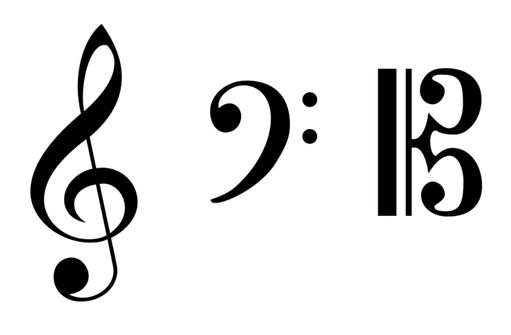
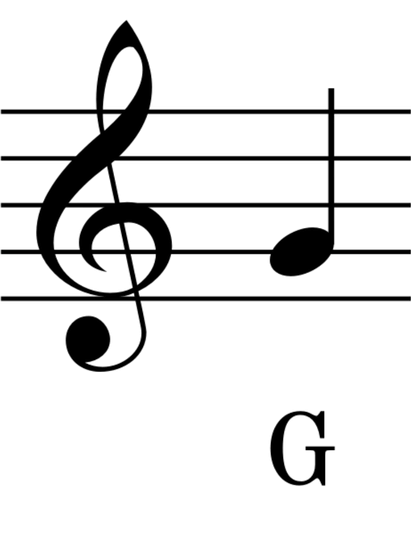
The Treble Clef is used for higher instruments. It is written like an old, medieval letter “G,” so it tells us what line on the staff is named “G” (some people even call this a G-clef). You’ll see that the treble clef wraps around the 2nd line, so that’s the line we call G. We can then use the musical alphabet to find out the names of all the other lines and spaces (and even the lines and spaces above and below the staff!).
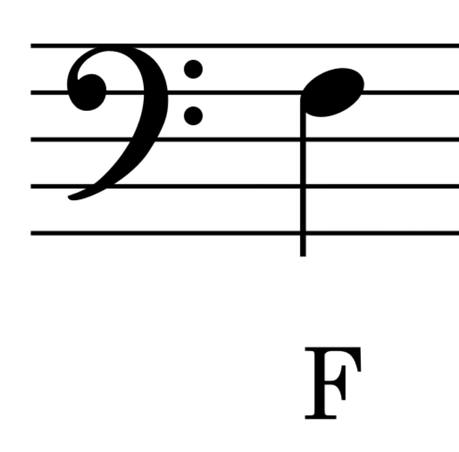
The Bass Clef is used for lower instruments. It is written like an old, cursive letter “F,” so it tells us what line on the staff is named “F” (some people even call this an F-clef). You’ll see that the bass clef has two dots on either side of the 4th line, so that’s the line we call F. We can then use the musical alphabet to find out the names of all the other lines and spaces (and even the lines and spaces above and below the staff!).
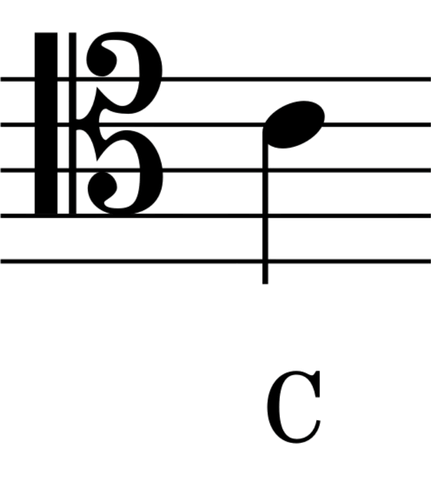
The third clef is a special clef. This clef has an arrow that points to a line and tells us which line is named “C.” This clef is special because we see it put in two different places. We most commonly point the C-clef at the 3rd/middle line of the staff, which makes it an Alto Clef. This clef is used for the Viola, the middle member of the string family.
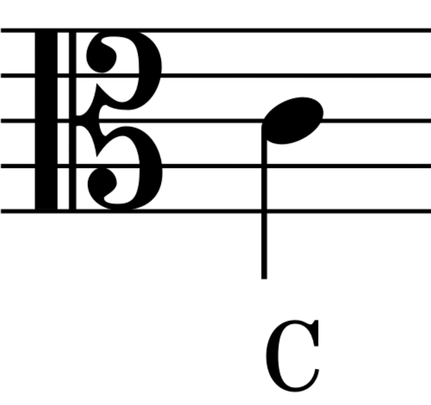
We can also put the C-clef on the 4th line, which makes it the Tenor Clef. This clef is used for some of the lower instruments that like to occasionally play higher notes (Cello, Bassoon, Trombone).