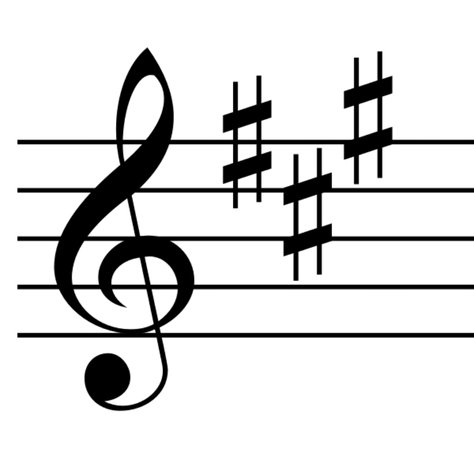
Sometimes a composer might want to use G# for the entirety of a piece without ever needing to use G♮ or G♭. Imagine having to draw a sharp or flat symbol next to every single note in a whole song. That would get messy fast! A Key Signature is a shortcut composers place at the beginning of a line of music. It shows a specific group of sharps or flats that applies to the whole song.
Think of it as a secret rulebook: if there’s a sharp sign on the G line at the start, it tells the musician to play every G as a G# throughout the piece, without the composer having to write it every single time.
🎮 Play the Keys & Key Signatures Quiz!
Melody refers to notes being played one after another, in sequence. Harmony refers to notes being played at the same time.
Scales are collections of notes ordered by pitch, while Chords are specific collections of notes played together. Scales and chords are the building blocks of music, much like letters and words are the building blocks of writing.
Putting it together: scales help us play and describe melody, while chords help us play and describe harmony.